
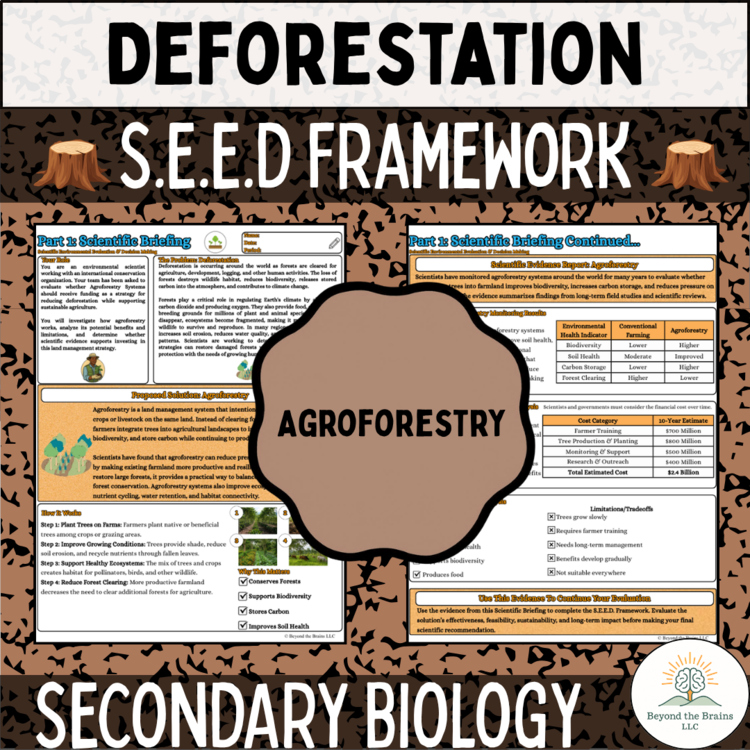
CER Practice: Climate Change Deforestation — Agroforestry
$4.25
S.E.E.D. Activity | 8th – 12th | Biology, Earth Sciences, Environment
Description
The standard story sets farming and forests against each other: clear the trees, plant the crop. Agroforestry rejects that trade. It is a land-use strategy that integrates trees with agriculture — trees and crops sharing the same land, so farmland can keep producing food while tree cover, soil health, and carbon storage recover. It is one of the most practical deforestation solutions in use today, and it gives students a different kind of solution to evaluate: not a device, but a design for land.
What’s inside
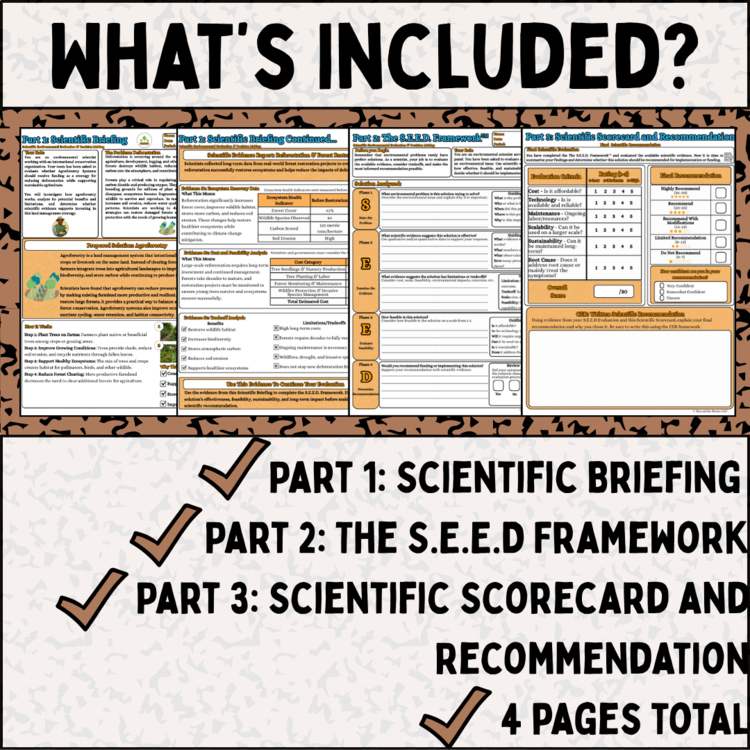
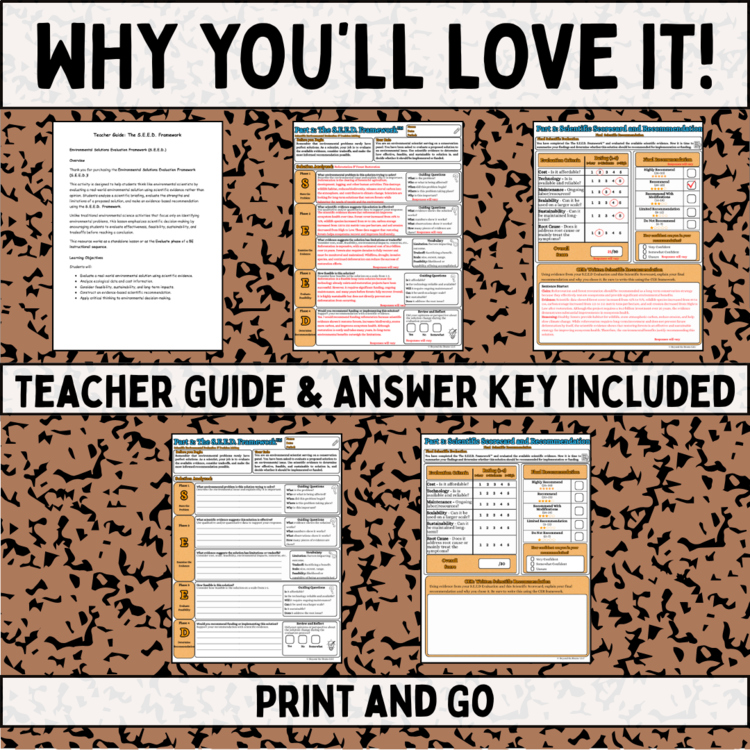
This is a S.E.E.D. Framework activity: students evaluate Agroforestry as a real-world deforestation solution using scientific evidence, weighing effectiveness, costs, and tradeoffs before writing an evidence-based recommendation. The exact component list (readings, data sets, page count, answer key) is not enumerated in the current listing and should be confirmed before this section is expanded.
How it runs in class
Students state the problem — land pressure driving forest loss — then examine the evidence for agroforestry systems, evaluate feasibility for the farmers and ecosystems involved, and determine a recommendation defended in CER writing. The activity works especially well after students have met a technology-based solution, because the comparison forces a more sophisticated question: not “which solution is best?” but “which solution fits this place, this economy, this forest?”
Built on the S.E.E.D. Framework
This activity runs the complete S.E.E.D. Framework: State the Problem, Examine the Evidence, Evaluate Feasibility, Determine a Recommendation. Agroforestry makes the Evaluate Feasibility step concrete — a solution that farmers can’t sustain won’t sustain a forest either, and students have to weigh both.
Standards alignment
NGSS: HS-LS2-7, HS-ESS3-4. Grades 8–12 · Biology, Earth Sciences, Environment.
Agroforestry also gives students a more honest picture of why deforestation happens in the first place: people clear forest to farm, feed families, and earn income. A solution that ignores those drivers fails socially before it fails ecologically. Weighing a strategy that works with livelihoods instead of against them is a sophistication most textbook treatments never ask of students — and this activity does.
Contrast it with the high-tech approach in the Drone Tree Planting activity, or get the deforestation set in the Deforestation CER Bundle. Free resources are in the Free Library.
Related products
-
Sale!
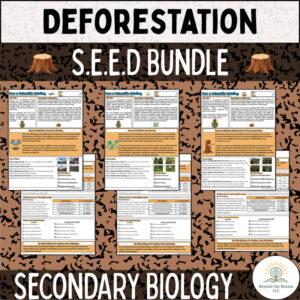
CER Practice: Climate Change Deforestation Bundle (Biology)
Original price was: $12.75.$10.25Current price is: $10.25. -
Sale!
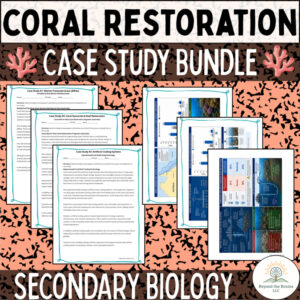
Climate Change: Coral Reef Restoration Case Study Bundle Activity (HS Biology)
Original price was: $7.50.$6.50Current price is: $6.50. -
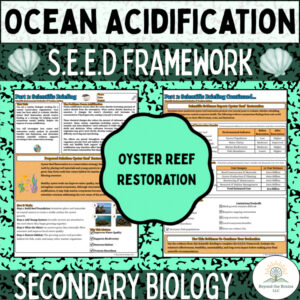
-
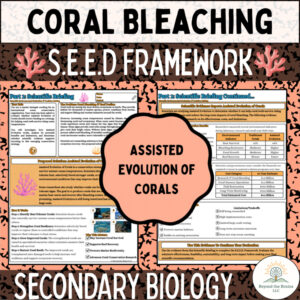
Reviews
There are no reviews yet.