
CER Practice: Climate Change Plastic Pollution — Ocean Cleanup
$4.25
S.E.E.D. Activity | 8th – 12th | Biology, Earth Sciences, Environment
Description
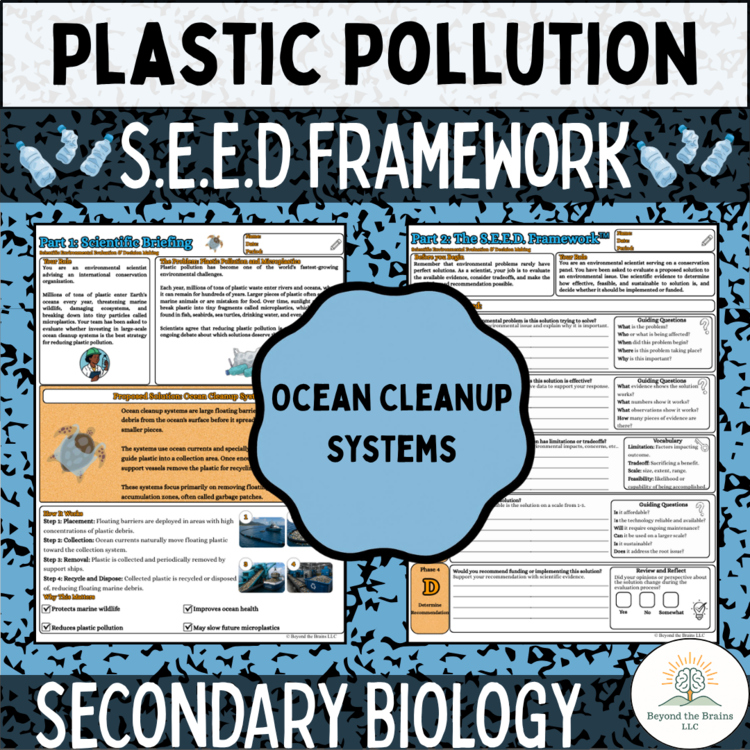
Millions of tons of plastic are already in the ocean, swirling in gyres and washing through food webs. Ocean cleanup systems are built to take it back out — large-scale efforts to remove plastic that has already reached the sea. The ambition is easy to admire. The evaluation is the interesting part: students judge ocean cleanup systems against the scientific evidence, including the hardest question in the whole plastic line — does cleaning up the ocean matter if the inflow never stops?
What’s inside
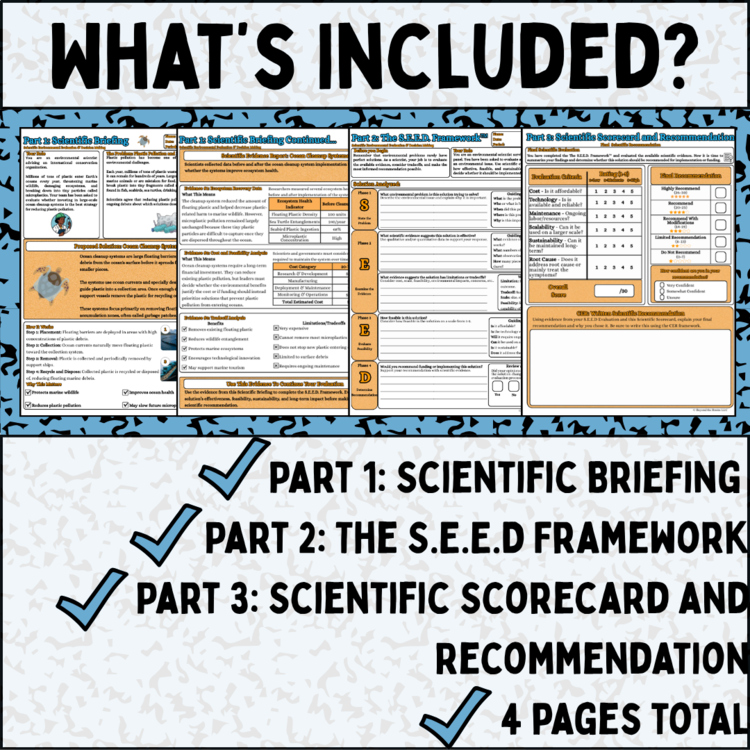
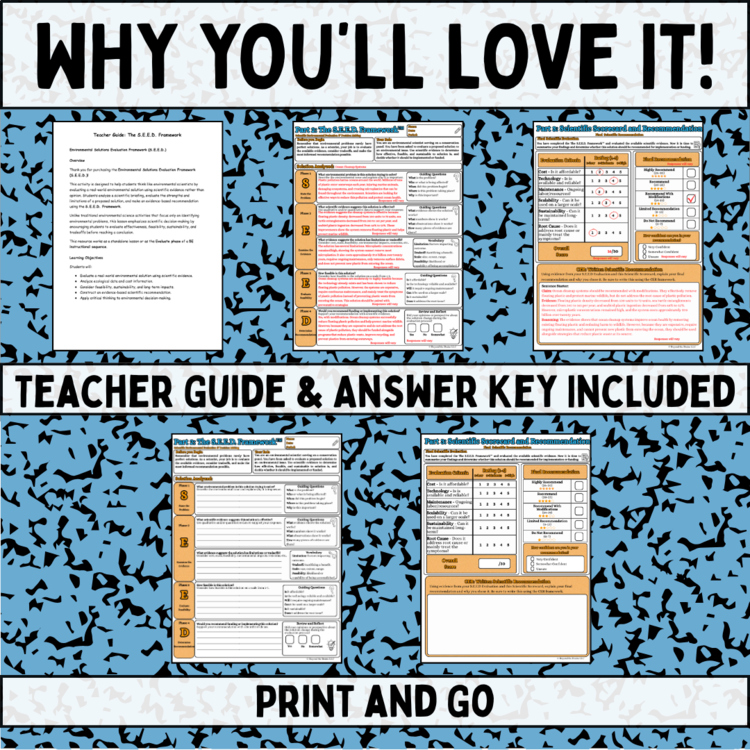
This is a S.E.E.D. Framework activity: students evaluate Ocean Cleanup Systems as a plastic pollution solution using scientific evidence, weighing effectiveness, costs, and tradeoffs before writing an evidence-based recommendation. The exact component list (readings, data sets, page count, answer key) is not enumerated in the current listing and should be confirmed before this section is expanded.
How it runs in class
Students state the problem — the plastic already at sea and what it does to marine ecosystems — examine the evidence on cleanup systems, evaluate feasibility at ocean scale, and determine a recommendation. Taught alongside prevention strategies, it produces the most sophisticated discussion in the plastic line, because students have to weigh remediation against prevention with finite resources. Taught alone, it is a complete, self-contained evaluation lesson.
Built on the S.E.E.D. Framework
This activity runs the complete S.E.E.D. Framework: State the Problem, Examine the Evidence, Evaluate Feasibility, Determine a Recommendation. Ocean cleanup is the framework’s tradeoffs step at full strength — a solution can be real, worthwhile, and still not be the first dollar to spend.
Standards alignment
NGSS: HS-LS2-6, HS-ESS3-4. Grades 8–12 · Biology, Earth Sciences, Environment.
Taught last in the plastic sequence, this activity produces the line’s most mature writing: students have prevention and interception in hand, so cleanup gets judged in context rather than in isolation. The question they end up debating — whether visible cleanup can ever outpace invisible inflow — is the actual question ocean policy faces, and their CER recommendations are a genuine rehearsal for it.
Compare the chokepoint strategy in the River Plastic Interceptors activity, or get all three plastic solutions in the Plastic Pollution CER Bundle ($10.25 instead of $12.75 separately). Free resources are in the Free Library.
Related products
-
Sale!
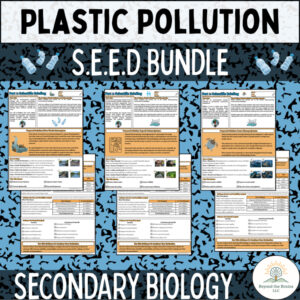
CER Practice: Climate Change Plastic Pollution Bundle (Biology)
Original price was: $12.75.$10.25Current price is: $10.25. -
-
-
Reviews
There are no reviews yet.