

Climate Change Human Impact Matching Activity (Environmental Science & HS Biology)
$3.75
Matching Activity | 8th – 12th | Biology, Earth Sciences, Environment
Description
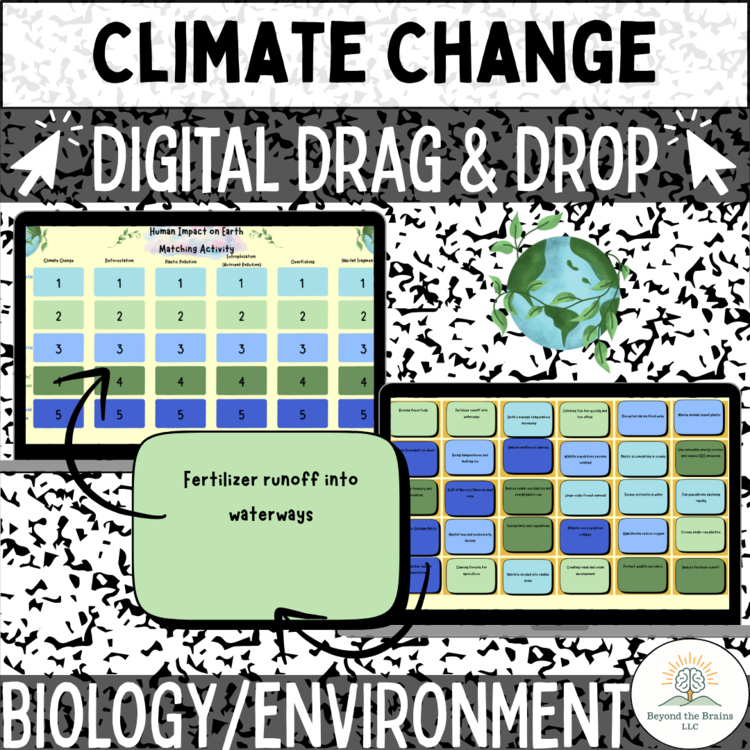
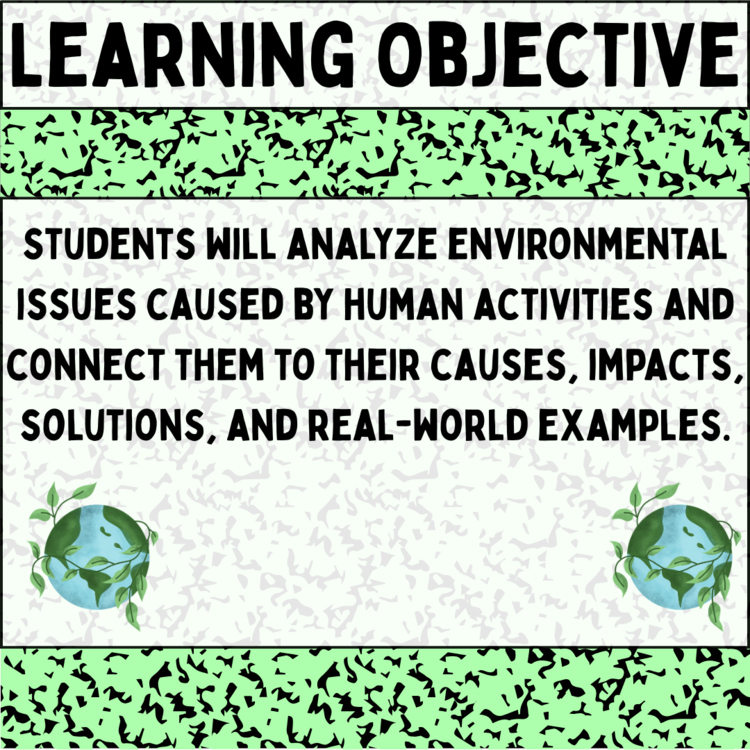
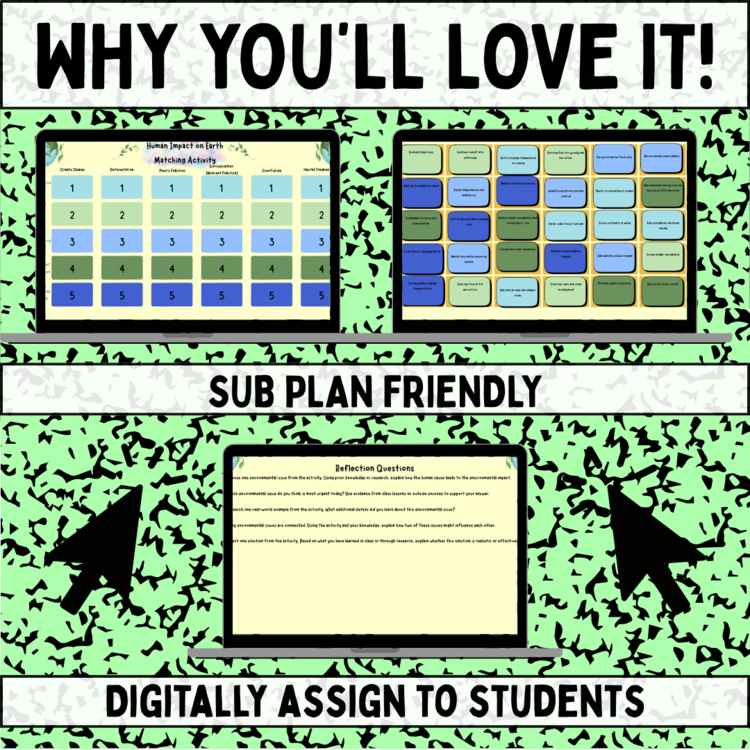
Cause and effect is the whole grammar of environmental science — and it’s exactly what this matching activity drills. Students match human activities to their environmental impacts, connecting causes like deforestation and fossil fuel use to their effects on ecosystems and climate. It is the fastest way in the catalog to check whether students actually understand the human impact web, or have just been nodding at it.
It’s also built for the biggest environmental-education day of the year: Earth Day, when you need an activity with real content that runs cleanly in a single period.
What’s inside
Per the current listing, students match human activities to their environmental impacts, connecting causes such as deforestation and fossil fuel use to effects on ecosystems and climate. The exact format (card set, worksheet, or digital file), number of pairs, and whether an answer key is included are not specified in the current listing and should be confirmed before this section is expanded.
How it runs in class
Use it as the Earth Day lesson itself, as a review before a human-impact assessment, or as the diagnostic that opens a climate unit — the mismatches students make tell you exactly where the misconceptions live. The cause-to-effect structure also makes it a natural pre-writing scaffold: a student who can match fossil fuel use to its climate effects is ready to argue about them in CER form. The content maps directly onto the human-impact material environmental science students — including AP Environmental Science classes reviewing for the exam — are expected to command.
Details
NGSS: HS-LS2-6, HS-LS2-7, HS-LS4-6, HS-ESS3-3, HS-ESS3-4. Grades 8–12 · Biology, Earth Sciences, Environment.
For a stronger second pass, have students chain their matches: pick one human activity and follow it through two or three linked impacts before it reaches the climate. The chains expose how many ‘separate’ environmental problems share drivers — and they set up the systems thinking that the S.E.E.D. solution evaluations elsewhere in the catalog depend on.
More in this format: the AAPI scientist matching activity and the Meiosis matching review. Free resources are in the Free Library.
Related products
-
-
Sale!
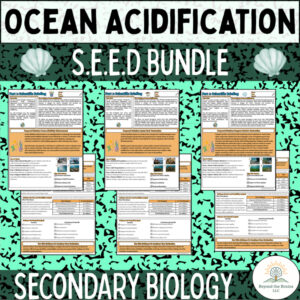
CER Practice: Climate Change Ocean Acidification Bundle (Biology)
Original price was: $12.75.$10.25Current price is: $10.25. -
-
Sale!
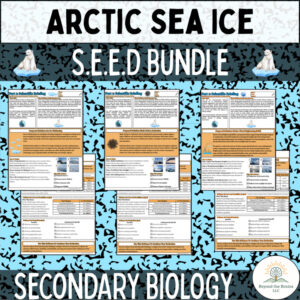
CER Practice: Climate Change Arctic Sea Ice Bundle (Biology)
Original price was: $12.75.$10.25Current price is: $10.25.
Reviews
There are no reviews yet.