
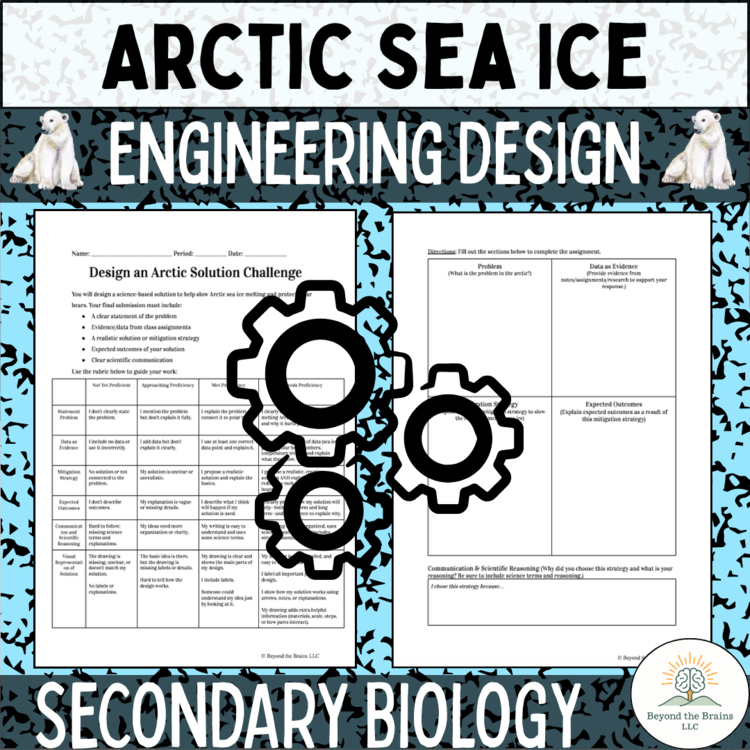
Climate Change Engineering Design Activity: Arctic Sea Ice & Polar Bears
$3.75
Engineering Design Activity | 8th – 12th | Biology, Earth Sciences, Environment
Description
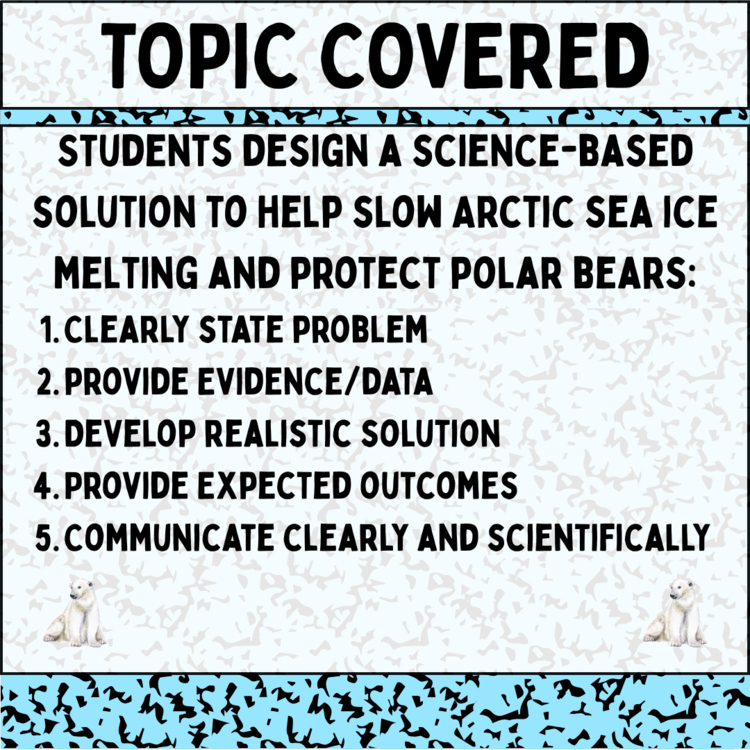
Understanding that sea ice is disappearing is the beginning of the science, not the end of it. This activity hands students the responder’s job: follow the engineering design process to design a solution that protects Arctic sea ice or polar bear habitat — defining the problem and its constraints, designing against them, and iterating when the first idea meets reality.
It is the Arctic line’s design capstone, and the place where the NGSS engineering standards stop being a poster and start being a practice.
What’s inside
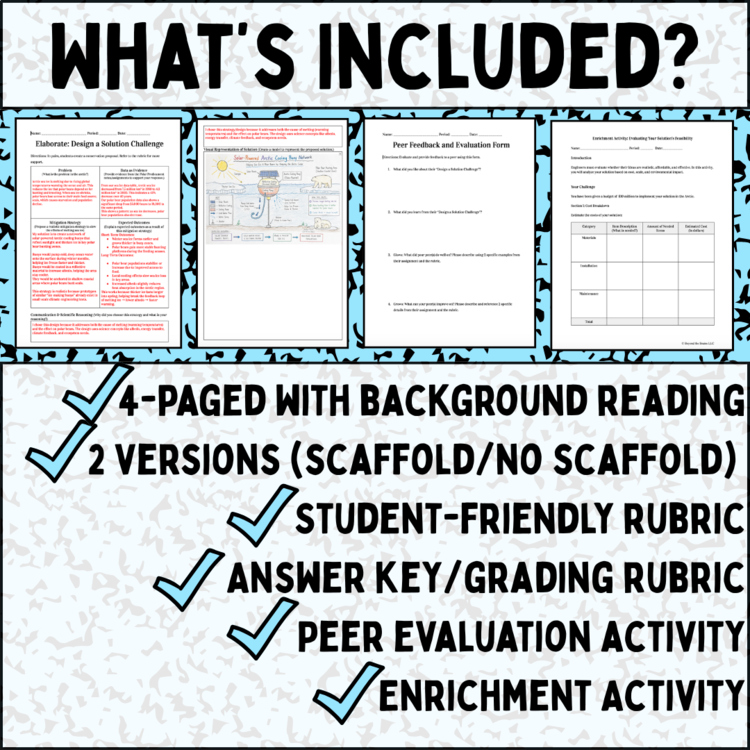
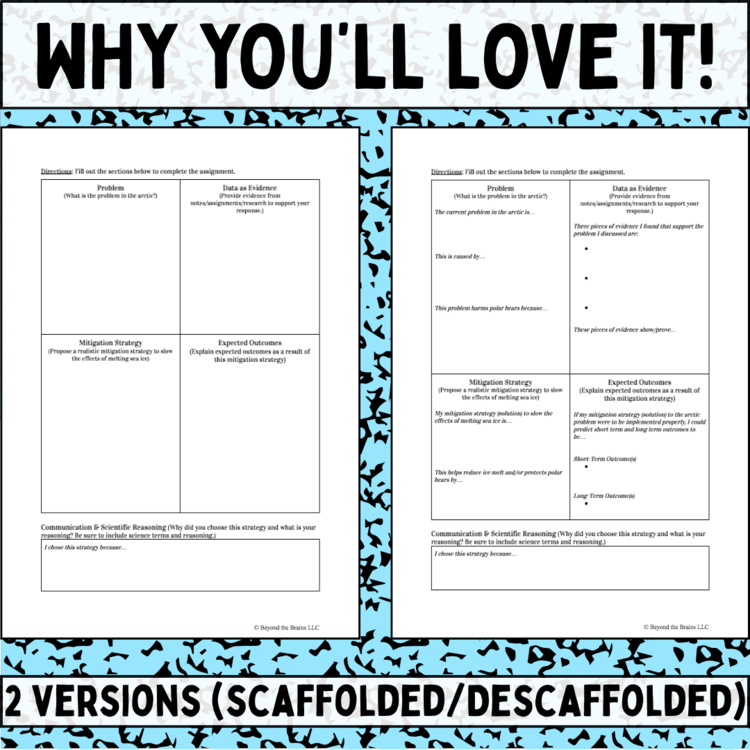
Per the current listing, students follow the engineering design process to design a solution protecting Arctic sea ice or polar bear habitat: define constraints and iterate. The exact component list (design brief format, criteria/constraints given, iteration and reflection structure, page count, rubric) is not enumerated in the current listing and should be confirmed before this section is expanded.
How it runs in class
Students define the problem precisely — which habitat, which threat, what counts as protection — then design within constraints, test their thinking against those constraints, and iterate. The activity works as the culminating piece of an Arctic sequence, as a standalone engineering design lesson inside a climate unit, or as the ETS anchor for a unit that is otherwise biology-heavy. Designs are stronger when students have already worked the ice and population data, because constraints stop being abstract once you’ve seen the numbers.
Standards alignment
NGSS: HS-ETS1-1, HS-ETS1-2, HS-ETS1-3, HS-LS2-6, HS-ESS3-5. Grades 8–12 · Biology, Earth Sciences, Environment.
Insist on the iteration step — it’s where the learning concentrates. First designs for protecting ice or bears are almost always too vague or too grand; constraints force specificity, and specificity is where engineering thinking actually happens. A design that survives revision against its own criteria does more for learning than a polished first draft ever could.
Give the design work its full context in the Arctic Sea Ice & Polar Bears 5E Unit, or pair it with the condensed sequence in the Arctic Mini Unit. Free resources are in the Free Library.
Related products
-
Sale!
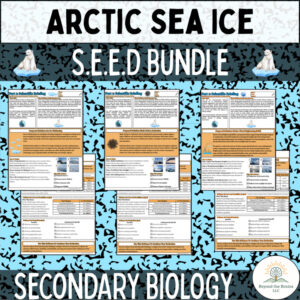
CER Practice: Climate Change Arctic Sea Ice Bundle (Biology)
Original price was: $12.75.$10.25Current price is: $10.25. -
-
-
Reviews
There are no reviews yet.